

Ph.D. in Public Health Program
Student Profiles
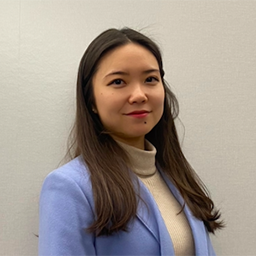
"After completing my master’s in healthcare administration, I realized I wanted to dive deeper into public health research—where I could make a meaningful contribution by addressing fundamental societal issues, especially in health economics and policy."

"My mother worked in public health and I saw the help and support they provide for the community. With my background in mathematics and statistics, my interests are in developing machine learning algorithms for predictive analytics."

"Having experienced firsthand how vital it is to provide rigorously supported, timely information to clinicians and policymakers, I became curious about how these guidelines were developed, and decided that I wanted to one day contribute to health research to support the development of effective policy and practices."

"When I was first diagnosed with type 1 diabetes about eight years ago, my interests shifted toward the medical and public health sectors as management of the disease takes precedence over multiple facets of my life. Since then, my involvement in community-led organizations in settings of various characteristics has fostered my interests further.”

“My interest in public health is rooted in my medical education at FMH College of Medicine and Dentistry in Pakistan, Master of Public Health in Epidemiology from the University of Texas Health Science Center at Houston School of Public Health, and experience in clinical research. Learning about healthcare systems, patient care, and how clinical practice intersects with public health made me realize the importance of preventive measures and effective public health strategies. I wanted to use evidence-based epidemiological research to improve patient outcomes."
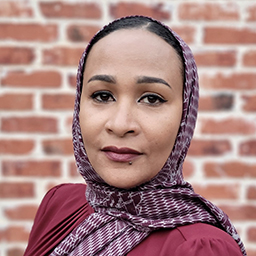
“My interest in public health was sparked by my belief from a young age that serving my community and helping others brings joy and fulfillment. Public health resonated with me because it focuses on addressing community-level issues and preventing diseases, which can have a broad and lasting impact on improving overall well-being."
The O’Donnell School of Public Health offers a transformative Ph.D. program in public health. Students at OSPH have the privilege of working alongside world-renowned experts, honing skills, and emerging as innovative thought leaders in the field. Immerse yourself in one of five captivating concentrations, Applied Epidemiology, Clinical Investigation, Health Economics, Systems, and Policy, Health Data Sciences, or Social and Behavioral Sciences, and embark on a journey marked by excellence, innovation, and collaboration. Embrace this unparalleled opportunity to shape the future of public health and become an agent of change.
Mission
Training thought leaders and innovators in applied epidemiology, clinical investigation, health data science and health economics and policy.
The O’Donnell School of Public Health upholds the broader UT Southwestern institutional mission of promoting health and a healthy society that enables the achievement of full human potential, with a deep commitment to the core values of excellence, innovation, teamwork, and compassion.
About the Program
Length: 4-5 years
Location: In-person at our Dallas Campus
All admitted students are provided a full-tuition waiver with a stipend for the 4-5 year program
60 semester credit hours are required to complete the program
Degree Requirements
Degree requirements are designed to be completed within four to five years of admission to the program.
To successfully complete all program requirements, students:
- Maintain a cumulative grade-point average (GPA) of at least a 3.0 for all UTSW graduate coursework.
- Complete all required coursework.
- Regularly attend the Public Health Seminar Series course.
- Successfully complete two preliminary examinations: Foundational Public Health Knowledge and Research Design.
- Successfully complete the dissertation proposal defense.
- Successfully complete the dissertation defense.
Application Process

The program accepts applications for the incoming Fall class starting in September. All doctoral applicants must submit a Ph.D. application. To be considered for priority review, applicants must submit their applications and all supplemental materials by December 1. The regular deadline to apply is May 1.
All application materials, such as transcripts, CV, your statement of purpose and objectives, a writing sample, and three letters of recommendation, must be submitted through the online application portal SOPHAS for your application to be considered by the Admissions Committee.
-
September: Application portal opens.
-
October–December: Early applications are given priority review by the Ph.D. Admissions Committee. Priority deadline: December 1.
-
January: Interviews begin for selected early applicants.
-
May: Applications are closed, interviews continue, and applicants begin receiving notification of funding and admission decisions.
Application Checklist
- Statement of Purpose and Objectives
Address the following areas in 1,000 words or less:
- What interests you about your chosen concentration (Applied Epidemiology, Clinical Investigation, Health Data Science, Health Economics and Policy)? Why did you choose UT Southwestern?
- Describe your research interest, relevant work, and commitment to public health.
- What are your short- and long-term career objectives?
- Describe how your personal background and life experiences led to your decision to pursue a Ph.D. in public health.
- Writing Sample
A writing sample is required for the application to the Ph.D. program. Papers written specifically for the Ph.D. application will not be accepted.
The writing sample should:- Be scientific writing of approximately 15-20 pages in length, preferably related to public health.
- Be an original work written by the applicant and submitted for a grade or publication where the applicant is the sole or first author.
- Demonstrate an aptitude for scholarly writing (e.g., manuscript, research proposal, master’s thesis or capstone paper, white paper or policy statement).
- Letters of Recommendation
Three letters of recommendation must come from recent professors, supervisors, or employers.
- Transcripts
Proof of a master’s degree (and any post-bachelor’s coursework or degrees) must be submitted from a regionally accredited institution or a foreign university with substantially equivalent bachelor’s degree requirements. We will accept an unofficial transcript for the application portal. If you receive an offer of admission and accept that offer, an official transcript must be sent by admissions@utsouthwestern.edu to the Admissions Office before the first day of class.
Ph.D. Funding
The O’Donnell School of Public Health pays students’ tuition and fees during the four to five years of graduate school.
All students studying for a Ph.D. in public health receive a nationally competitive research assistantship of $40,000 per year throughout the course of their Ph.D. studies.
The O’Donnell School of Public Health provides this support during the first two years of graduate school. In subsequent years, students receive a research assistantship paid from research grants awarded to their dissertation mentors or from one of the institutional National Institutes of Health (NIH) training grants associated with various areas of research training. Graduate students are encouraged to apply for individual fellowships such as NIH F31, American Heart Association, etc. The O’Donnell School helps students identify and apply for fellowship opportunities.
Health insurance coverage for the student is provided at no expense for the duration of Ph.D. studies. Additional coverage is available for purchase through the University of Texas System Blue Cross Blue Shield plan during any benefits enrollment period.
Concentrations
Students in all concentrations receive substantial training in research methods and data analysis. With a Ph.D. in public health from the O’Donnell School of Public Health, students impact the health of underserved populations, provide evidence for decision-making, lead in the development of new research, and become independent and thoughtful leaders in the community.
Students choose from one of five concentrations:

Clinical Investigation
A medical or dental degree (e.g. MD, DO, MBBS, DDS, DMD, PharmD) is required. Exceptional candidates who do not meet these requirements may be considered on a case-by-case basis.
The Clinical Investigation PhD program will equip future researchers with the essential tools and knowledge to conduct high-quality clinical and translational research. During the program, the students will master study design methodologies, advanced statistical analysis techniques, and practical applications relevant to both population-based and patient-oriented studies.
Students:
- Gain the expertise to plan and conduct their own clinical and translational research, disseminate their results, and apply for grant funding.
- Develop expertise in epidemiology to lead disease outbreak investigations and field-based interventions to address public health issues of importance.
- Core Competencies and Learning Objectives
The Clinical Investigation doctoral curriculum is designed to provide students with the following core competencies:
- Assess the strengths and limitations of various clinical and translational study designs to evaluate health outcomes and evaluate the potential impact of specific sources of bias in epidemiologic studies.
- Design, analyze, and interpret findings of different clinical and translational studies.
- Conduct well designed clinical trials to evaluate different health modalities and analyze data from the trials.
- Critically assess and adhere to the fundamental ethical principles governing clinical and translational research.
- Understand the grant writing process and write a grant proposal.

Applied Epidemiology
Applied Epidemiology equips trainees with the skills and knowledge to tackle pressing health challenges worldwide and to take leadership positions in important global public health settings.
Students will:
- Gain expertise in identifying disease etiologies, developing and evaluating effective biomedical interventions, and leading change in diverse settings both domestically and internationally.
- Develop expertise in epidemiology to lead disease outbreak investigations and field-based interventions to address public health issues of importance.
- Core Competencies and Learning Objectives
- Demonstrate expertise in foundational public health knowledge and current epidemiology research on biological and socioeconomic factors affecting human health.
- Design, analyze, and interpret findings of different epidemiological studies.
- Design and critically analyze surveillance systems to identify strengths and weaknesses in data collection, analysis, and interpretation.
- Apply epidemiological skills to investigate infectious disease outbreaks and/or analyze trends in non-communicable diseases and other public health issues.
- Translate complex public health science into understandable messages tailored to various audiences, considering their diverse levels of health literacy, cultural backgrounds, and communication preferences.

Health Data Sciences
Health data science focuses on the applications of data science methods to facilitate and improve health science, biomedical research, and patient care. Students in the Health Data Sciences Ph.D. program develop expertise in mathematical modeling, statistical inference and methods, computer sciences, information sciences, machine learning, and artificial intelligence with application in health science and biomedical research.
Students:
- Learn practical skills to extract meaningful knowledge from noisy structured and unstructured biomedical data.
- Learn the theory and methods of health data science in a dynamic interdisciplinary environment and develop rigorous methodology research and analytical skills.
- Core Competencies and Learning Objectives
The Health Data Science concentration curriculum is designed to provide students with the following core competencies:
- Data Science Expertise: Demonstrate expertise in foundational data science knowledge, current research, and its application to health science and biomedical research.
- Research Design and Analysis: Develop analysis plans, select appropriate methods, and design and implement analysis techniques for complex data in health science and biomedical research.
- Quantitative and Qualitative Analysis: Model and analyze quantitative and qualitative data using mathematics, biostatistics, informatics, and computational algorithms.
- Scientific Communication: Write manuscripts for scholarly journals, make oral presentations to scientific audiences, and explain research to various audiences, including researchers, clinicians, health care professionals, the public, and media.
- Expertise in Health Data Science: Develop expertise in a substantive area of health data science, applying data science principles and methods to address specific health-related research questions.

Health Economics, Systems, and Policy
Health economics, systems, and policy is a multidisciplinary field of scientific investigation that examines the multiple facets of policies and programs that impact individual and community health and well-being. This includes the use, cost, quality, accessibility, and delivery of health care services and the complex interactions of social, environmental, and programmatic factors that affect health outcomes directly or indirectly. The research domains of health economics and policy include groups, organizations, institutions, communities, and populations.
Students:
- Develop expertise in economic theory including consumer and firm decision-making and economic valuation.
- Learn theoretical and empirical approaches to policy research in a dynamic interdisciplinary environment and develop rigorous research design and analysis skills.
- Core Competencies and Learning Objectives
The Health Economics, Systems, and Policy concentration curriculum is designed to provide students with the following core competencies:
- Formulate health economic and policy research questions based on economic theory and econometric methods.
- Synthesize economic theory and empirical evidence for health policy decision makers to facilitate translation and dissemination of public health interventions, applications, or programs.
- Design, evaluate, interpret, and communicate the results of quantitative and qualitative research for applications in health outcomes, health economics, and health policy research.
- Ensure the ethical and responsible conduct of health services and policy research.
- Work independently and as part of a team to conduct health economics and policy research.

Social and Behavioral Sciences
The doctoral program in Social and Behavioral Sciences prepares strong transdisciplinary scholars for high impact careers in population research and public health practice. Students undergo vigorous methods training combined with a mentored internship in either research or practice, assuring their robust skills and career readiness upon graduation.
The OSPH Department of Social and Behavioral Sciences gives primary emphasis to evidence-based practices and community-focused solutions for underserved and vulnerable populations, whether in Texas or other parts of the globe. Our faculty advance social and behavioral interventions to improve health outcomes, elucidate drivers of health disparity, translate cutting edge discoveries to meet the needs of communities and families, and train the next generation of socio-behavioral scholars and practitioners of public health.
- Core Competencies and Learning Objectives
Students will achieve the following core competencies:
- Demonstrate expertise in foundational public health knowledge and socio-behavioral theory driving public health phenomena.
- Design, conduct, and evaluate rigorous programs of public health research and socio-behavioral interventions.
- Communicate public health research and priorities effectively to diverse audiences with state-of-the-art media and formats.
- Collaborate in trans-disciplinary teams to maximize positive impacts of public health research, interventions, and programming.
- Translate recent socio-behavioral scientific discoveries to resolve current public health challenges in real-world settings.
Ph.D. Curriculum
The Individual Course Planner below outlines the full course sequence for each concentration, from matriculation in Fall 2026 through Spring 2030. Select a concentration, then expand a year to see the courses scheduled for each term. Courses required of all Ph.D. students appear in every concentration, so each plan is complete on its own. A total of 60 credits is required to graduate.
- Applied Epidemiology
- Clinical Investigation
- Health Data Sciences
- Health Economics, Systems, and Policy
- Social and Behavioral Sciences
- Electives
- First Year
Fall 2026
Course Number Course Title Credits PUBH 9300 Foundations of Public Health 3 PUBH 9101W Responsible Conduct of Research 1 PUBH 9000 Seminar in Public Health Topics 0 PUBH 9001 Journal Club 0 EPID 9301 Advanced Epidemiology I 3 Elective 3 Semester total 10 Spring 2027
Course Number Course Title Credits PUBH 9102W Introduction to Programming and Software Packages 1 PUBH 9001 Journal Club 0 EPID 9200 Digital Media for Health Outcomes 2 HDS 9302 Regression Models 3 EPID 9302 Advanced Epidemiologic Methods II and Causal Inference 3 Semester total 9 Summer 2027
Preliminary Examination: Foundational Public Health Knowledge
Course Number Course Title Credits HPSA 5301W Social Determination of Health 3 EPID 9300 Applied Research Assistantship 3 Semester total 6 - Second Year
Fall 2027
Course Number Course Title Credits PUBH 9001 Journal Club 0 EPID or PUBH elective 3 EPID or PUBH elective 3 EPID or PUBH elective 3 Semester total 9 Spring 2028
Course Number Course Title Credits PUBH 9001 Journal Club 0 PUBH 9302 Research Capstone: Grant Writing for Dissertation 3 HEAP 9307 Program Evaluation 3 EPID 9307 Strategic Leadership and Decision Making 3 Semester total 9 Summer 2028
Preliminary Examination: Research Design
Course Number Course Title Credits EPID 9300 Applied Research Assistantship 0 Content area elective 3-6 Semester total 6 - Third Year
Fall 2028
Course Number Course Title Credits PUBH 9001 Journal Club 0 PUBH 9090 Directed Readings 0-3 PUBH 9099 Dissertation 0-6 Content area elective 3 Semester total 9 Spring 2029
Course Number Course Title Credits PUBH 9001 Journal Club 0 PUBH 9100 Scientists as Professionals 1 PUBH 9090 Directed Readings 0-3 PUBH 9099 Dissertation 0-6 AI and Big Data or AI in Public Health (PUBH 9302 or PUBH 5106) 1 or 3 Content area elective 3 Semester total 9-10 Summer 2029
Course Number Course Title Credits Content area elective 3 Content area elective 3 Semester total 6 - Fourth Year
Fall 2029
Course Number Course Title Credits PUBH 9090 Directed Readings 0-3 PUBH 9099 Dissertation 0-6 Semester total 9 Spring 2030
Course Number Course Title Credits PUBH 9090 Directed Readings 0-3 PUBH 9099 Dissertation 0-6 Semester total 9
- First Year
Fall 2026
Course Number Course Title Credits PUBH 9300 Foundations of Public Health 3 PUBH 9101W Responsible Conduct of Research 1 PUBH 9000 Seminar in Public Health Topics 0 PUBH 9001 Journal Club 0 CLIN 9303 Principles of Clinical Epidemiology 3 Elective 3 Semester total 10 Spring 2027
Course Number Course Title Credits PUBH 9102W Introduction to Programming and Software Packages 1 PUBH 9001 Journal Club 0 CLIN 9301 Clinical Trials: Design & Analysis 3 EPID 9302 Advanced Epidemiologic Methods II and Causal Inference 3 QDS 5303 Intermediate Biostatistics 3 Semester total 10 Summer 2027
Preliminary Examination: Foundational Public Health Knowledge
Course Number Course Title Credits HPSA 5301W Social Determination of Health 3 CLIN 9300 Clinical/Translational Research Assistantship 0 Elective 3 Semester total 6 - Second Year
Fall 2027
Course Number Course Title Credits PUBH 9001 Journal Club 0 HDS 9301 Statistical Inference 3 PUBH elective 3 PUBH elective 3 Semester total 9 Spring 2028
Course Number Course Title Credits PUBH 9001 Journal Club 0 PUBH 9302 Research Capstone: Grant Writing for Dissertation 3 CLIN 9304 Regulatory Issues in Clinical Research 3 HDS 9302 Regression Models 3 Semester total 9 Summer 2028
Preliminary Examination: Research Design
Course Number Course Title Credits CLIN 9302 Infectious Disease Modeling 3 CLIN 9300 Clinical/Translational Research Assistantship 0 Content area elective 3 Semester total 6 - Third Year
Fall 2028
Course Number Course Title Credits PUBH 9001 Journal Club 0 PUBH 9090 Directed Readings 0-3 PUBH 9099 Dissertation 0-6 Content area elective 3 Semester total 9 Spring 2029
Course Number Course Title Credits PUBH 9001 Journal Club 0 PUBH 9100 Scientists as Professionals 1 PUBH 9090 Directed Readings 0-3 PUBH 9099 Dissertation 0-6 AI and Big Data or AI in Public Health (PUBH 9302 or PUBH 5106) 1 or 3 Content area elective 3 Semester total 9-10 Summer 2029
Course Number Course Title Credits Content area elective 3 Content area elective 3 Semester total 6 - Fourth Year
Fall 2029
Course Number Course Title Credits PUBH 9090 Directed Readings 0-3 PUBH 9099 Dissertation 0-6 Semester total 9 Spring 2030
Course Number Course Title Credits PUBH 9090 Directed Readings 0-3 PUBH 9099 Dissertation 0-6 Semester total 9
- First Year
Fall 2026
Course Number Course Title Credits PUBH 9300 Foundations of Public Health 3 PUBH 9101W Responsible Conduct of Research 1 PUBH 9000 Seminar in Public Health Topics 0 PUBH 9001 Journal Club 0 HDS 9300 Principles of Data Science 3 HDS 9301 Statistical Inference 3 Semester total 10 Spring 2027
Course Number Course Title Credits PUBH 9001 Journal Club 0 HDS 9302 Regression Models 3 Elective 3 Elective 3 Semester total 9 Summer 2027
Preliminary Examination: Foundational Public Health Knowledge
Course Number Course Title Credits HPSA 5301W Social Determination of Health 3 Elective 3 Semester total 6 - Second Year
Fall 2027
Course Number Course Title Credits PUBH 9001 Journal Club 0 HDS 9304 Advanced Data Analysis Methods 3 HDS 9305 Machine Learning and Deep Learning 3 Content area elective 3 Semester total 9 Spring 2028
Course Number Course Title Credits PUBH 9001 Journal Club 0 PUBH 9302 Research Capstone: Grant Writing for Dissertation 3 Content area elective 3 Content area elective 3 Semester total 9 Summer 2028
Preliminary Examination: Research Design
Course Number Course Title Credits Content area elective 3-6 Semester total 6 - Third Year
Fall 2028
Course Number Course Title Credits PUBH 9001 Journal Club 0 PUBH 9090 Directed Readings 0-3 PUBH 9099 Dissertation 0-6 Content area elective 3 Semester total 9 Spring 2029
Course Number Course Title Credits PUBH 9001 Journal Club 0 PUBH 9100 Scientists as Professionals 1 PUBH 9090 Directed Readings 0-3 PUBH 9099 Dissertation 0-6 AI and Big Data or AI in Public Health (PUBH 9302 or PUBH 5106) 1 or 3 Content area elective 3 Semester total 9-10 Summer 2029
Course Number Course Title Credits Content area elective 3 Content area elective 3 Semester total 6 - Fourth Year
Fall 2029
Course Number Course Title Credits PUBH 9090 Directed Readings 0-3 PUBH 9099 Dissertation 0-6 Semester total 9 Spring 2030
Course Number Course Title Credits PUBH 9090 Directed Readings 0-3 PUBH 9099 Dissertation 0-6 Semester total 9
- First Year
Fall 2026
Course Number Course Title Credits PUBH 9300 Foundations of Public Health 3 PUBH 9101W Responsible Conduct of Research 1 PUBH 9000 Seminar in Public Health Topics 0 PUBH 9001 Journal Club 0 QDS 5401 Introduction to Biostatistics & Programming 4 HEAP 9302 U.S. Health Policy 3 Semester total 11 Spring 2027
Course Number Course Title Credits PUBH 9102W Introduction to Programming and Software Packages 1 PUBH 9001 Journal Club 0 HEAP 9307 Program Evaluation 3 HEAP 9303 Health Policy II 3 HEAP 9304 Applied Econometrics I 3 Semester total 10 Summer 2027
Preliminary Examination: Foundational Public Health Knowledge
Course Number Course Title Credits HPSA 5301W Social Determination of Health 3 Elective 3 Semester total 6 - Second Year
Fall 2027
Course Number Course Title Credits PUBH 9001 Journal Club 0 PUBH 9303 Qualitative Research Methods 3 HEAP 9305 Applied Econometrics II 3 HEAP 9300 Health Economics I 3 Semester total 9 Spring 2028
Course Number Course Title Credits PUBH 9001 Journal Club 0 PUBH 9302 Research Capstone: Grant Writing for Dissertation 3 HEAP 9301 Health Economics II 3 HEAP 9306 Economic Valuation 3 Semester total 9 Summer 2028
Preliminary Examination: Research Design
Course Number Course Title Credits Content area elective 3-6 Semester total 6 - Third Year
Fall 2028
Course Number Course Title Credits PUBH 9001 Journal Club 0 PUBH 9090 Directed Readings 0-3 PUBH 9099 Dissertation 0-6 Content area elective 3 Semester total 9 Spring 2029
Course Number Course Title Credits PUBH 9001 Journal Club 0 PUBH 9100 Scientists as Professionals 1 PUBH 9090 Directed Readings 0-3 PUBH 9099 Dissertation 0-6 AI and Big Data or AI in Public Health (PUBH 9302 or PUBH 5106) 1 or 3 Content area elective 3 Semester total 9-10 Summer 2029
Course Number Course Title Credits Content area elective 3 Content area elective 3 Semester total 6 - Fourth Year
Fall 2029
Course Number Course Title Credits PUBH 9090 Directed Readings 0-3 PUBH 9099 Dissertation 0-6 Semester total 9 Spring 2030
Course Number Course Title Credits PUBH 9090 Directed Readings 0-3 PUBH 9099 Dissertation 0-6 Semester total 9
- First Year
Fall 2026
Course Number Course Title Credits PUBH 9300 Foundations of Public Health 3 PUBH 9101W Responsible Conduct of Research 1 PUBH 9000 Seminar in Public Health Topics 0 PUBH 9001 Journal Club 0 SBS 9301 Community-Engaged and Community-Based Participatory Action Research 3 SBS 9302 Advanced Social and Behavioral Theory in Public Health 3 Semester total 10 Spring 2027
Course Number Course Title Credits PUBH 9102W Introduction to Programming and Software Packages 1 PUBH 9001 Journal Club 0 SBS 9303 Applied Team Science, Mixed Methods & Innovation in Public Health 3 SBS 9304 Advanced Methods for Designing and Evaluating Social and Behavioral Health Interventions 3 SBS elective 3 Semester total 10 Summer 2027
Preliminary Examination: Foundational Public Health Knowledge
Course Number Course Title Credits HPSA 5301W Social Determination of Health 3 SBS 9300 SBS Ph.D. Internship (Practical or Research) 3 Semester total 6 - Second Year
Fall 2027
Course Number Course Title Credits PUBH 9001 Journal Club 0 SBS elective 3 Content area elective 3 Content area elective 3 Semester total 9 Spring 2028
Course Number Course Title Credits PUBH 9001 Journal Club 0 PUBH 9302 Research Capstone: Grant Writing for Dissertation 3 EPID 9200 Digital Media for Health Outcomes 2 Content area elective 3 Content area elective 3 Semester total 11 Summer 2028
Preliminary Examination: Research Design
Course Number Course Title Credits Content area elective 3-6 Semester total 6 - Third Year
Fall 2028
Course Number Course Title Credits PUBH 9001 Journal Club 0 PUBH 9090 Directed Readings 0-3 PUBH 9099 Dissertation 0-6 Content area elective 3 SBS 9305 Advanced Proposal Writing for Social and Behavioral Sciences 3 Semester total 9 Spring 2029
Course Number Course Title Credits PUBH 9001 Journal Club 0 PUBH 9100 Scientists as Professionals 1 PUBH 9090 Directed Readings 0-3 PUBH 9099 Dissertation 0-6 AI and Big Data or AI in Public Health (PUBH 9302 or PUBH 5106) 1 or 3 Content area elective 3 Semester total 9-10 Summer 2029
Course Number Course Title Credits Content area elective 3 Content area elective 3 Semester total 6 - Fourth Year
Fall 2029
Course Number Course Title Credits PUBH 9090 Directed Readings 0-3 PUBH 9099 Dissertation 0-6 Semester total 9 Spring 2030
Course Number Course Title Credits PUBH 9090 Directed Readings 0-3 PUBH 9099 Dissertation 0-6 Semester total 9
Fifteen credit hours of elective coursework are required. There is no fixed list of electives for most concentrations; students may choose from any course offered by the O’Donnell School of Public Health, in consultation with their adviser. Students in the Social and Behavioral Sciences concentration select from the Social and Behavioral Sciences courses available in the catalog. Students may also take the required courses of another concentration as electives with the approval of their adviser and the Ph.D. program director. The courses below are representative electives available in the catalog.
| Course Number | Course Title | Credits |
|---|---|---|
| HI 5302 | Health Information Technology | 1 |
| PUBH 5304 | Bioinformatics & Computational Biology | 3 |
| PUBH 5325 | Data Science Consulting & Case Study | 3 |
| QDS 5319 | Genetic Epidemiology | 3 |
| PUBH 9301 | AI & Big Data for Public Health Topics | 3 |
| CLIN 9301 | Clinical Trials: Design & Analysis | 3 |
| PUBH 9303 | Qualitative Research Methods | 3 |
| PUBH 5309 | Survey Data Analysis | 3 |
| Behavioral Intervention Research Methods | 3 | |
| PUBH 5308 | Advanced Public Health Data | 3 |
| EPID 9304 | Chronic Disease Epidemiology | 3 |
| QDS 5202 | Vaccines & Vaccine-Preventable Diseases | 3 |
| EPID 9305 | Epidemiologic Applications of GIS and Spatial Analysis | 3 |
| EPID 9306 | Outbreak Investigation and Infectious Disease Epidemiology | 3 |
| PUBH 9305 | Systems Thinking in Public Health | 3 |
| PUBH 9306 | Public Health and Law | 3 |
| CLIN 9302 | Infectious Disease Modeling | 3 |
| PUBH 9307 | Advanced Topics in Public Health | 3 |
Program Notes
- Preliminary examinations: Foundational Public Health Knowledge is taken in Summer 2027 and Research Design in Summer 2028.
- Health Data Sciences: Students in this concentration are exempt from PUBH 9102W Introduction to Programming and Software Packages.
- Good standing: A student must make satisfactory progress in the prescribed course of study and maintain at least a 3.0 GPA.
Full course descriptions are available in the O’Donnell School of Public Health catalog.
Foundational Knowledge Objectives
- Explain public health history, philosophy, and values.
- Identify the core functions of public health and the 10 essential services.
- Explain the role of quantitative and qualitative methods and sciences in describing and assessing a population’s health.
- List major causes and trends of morbidity and mortality in the U.S. or other community relevant to the school or program.
- Discuss the science of primary, secondary, and tertiary prevention in population health, including health promotion, screening, etc.
- Explain the critical importance of evidence in advancing public health knowledge.
- Explain effects of environmental factors on a population’s health.
- Explain biological and genetic factors that affect a population’s health.
- Explain behavioral and psychological factors that affect a population’s health.
- Explain the social, political, and economic determinants of health and how they contribute to population health and health inequities.
- Explain how globalization affects global burdens of disease.
- Explain an ecological perspective on the connections among human health, animal health, and ecosystem health (e.g., One Health).
Source: CEPH 2021 Accreditation Criteria , pages 34-36
Written Comprehensive Preliminary Examinations
In addition to coursework, doctoral students must pass two written comprehensive exams, a dissertation proposal defense (written and oral) and a final dissertation defense (written dissertation and oral exam). Through the Preliminary Examination process, students demonstrate their command of scholarly literature in public health, their critical analytic skills, and their ability in research design. The examination process begins as early as the summer following the second semester of full-time enrollment in the Ph.D. program. After successfully completing the two Preliminary Examinations students are qualified to proceed to their Dissertation Proposal Defense. Students become doctoral candidates after successfully defending their dissertation proposal.
Preliminary Examination 1 tests the student’s knowledge of the foundations of public health and their ability to apply concepts to concentration-related questions. It is generally taken during the summer following the 2nd semester in the program. Preliminary Examination 2 tests the student's ability to develop a research design for secondary data and is generally taken during the summer following the fourth semester in the program. The following explains each exam in greater detail:
Examination 1. Foundational Public Health Knowledge

This examination draws from the 12 foundational public health learning objectives. Students are asked to apply concepts in the concentration-relevant field to questions of public health. This examination is administered in person with a four-hour time limit. The examination is graded on a pass/fail basis and offered twice per year during summer and winter breaks. The faculty committee assesses the recommended process for students who do not receive a passing grade on the first attempt (e.g., rewrite a portion of the examination, answer a related question, retake the exam at the next offering). Students may take the examination twice and petition for a third attempt if needed.
Examination 2. Research Design

This examination is designed to assess the doctoral student’s proficiency in research design and health data application. The examination is graded on a pass/fail basis and offered twice per year during summer and winter breaks. The faculty committee assesses the recommended process for students who do not receive a passing grade on the first attempt (e.g., rewrite a portion of the examination, answer a related question, retake the examination at the next offering). Students may take the exam twice and petition for a third attempt, if needed.
FAQs
- How many students are granted admission to the program?
Three to five applicants per concentration will be admitted to the OSPH Ph.D. program.
- How long is the Ph.D. program?
Depending on the concentration, the curriculum includes 18-24 credit hours in core courses, 12 credit hours in public health courses, 15 credit hours in elective courses, and 24 dissertation credit hours; 60 semester credit hours are required to complete the program. Students are expected to complete their Ph.D. in four to five years.
- What funding opportunities are available for students?
Applied Epidemiology, Clinical Investigation, Health Data Science, Health Economics, Systems, and Policy, and Social and Behavioral Sciences doctoral program students are admitted with a four-year funding commitment as Graduate Research Assistants. This includes tuition, a full stipend, and health insurance. Students are required to work 20 hours a week as Graduate Research Assistants to maintain eligibility.
Stipend: $40,000 per year
Tuition: Fully covered
Student Insurance: Fully covered
- Are recommendation letters required?
Yes, three recommendations are required when you apply. Academic and professional recommendations are desired.
- Do I need to have a master’s degree to apply?
Professional degrees or master's degrees required, but exceptions may be permitted for outstanding candidates on an individual basis.
- Is the GRE required to apply for the Ph.D.?
GRE scores are optional but highly recommended. Applicants are encouraged to send their scores to UTSW. The institution code for sending the GRE scores is 6686, U Texas SW Med Ctr Dallas.
- When can I expect a decision on my application?
Decisions will be rendered from January through May.
- Are interviews for the Ph.D. program required?
Yes, selected applicants are invited to engage with members of the Ph.D. Admissions Committee to discuss their research interests and application.
- Are you accepting international applicants?
Yes, UT Southwestern Medical Center has received permission from the Department of Homeland Security Student and Exchange Visitor Program (SEVP) to accept international students in F-1/J-1 visa status. We encourage international applicants to complete an application.
- Is the Ph.D. program considered STEM?
Our Ph.D. program is not a designated STEM (science, technology, engineering, and math) program.
- Can I transfer credits from my master’s degree or another Ph.D. program?
Students may request to transfer credit from another accredited institution after they are accepted into the program. Students are allowed to transfer up to 40 credits from another accredited institution. All courses will be evaluated and approved by the PhD program director and/or Associate Dean for Academic Affairs.
Life at UTSW

When you become a student at UT Southwestern, you join a community that helps you thrive. We value wellness, emphasize security, and celebrate diversity while you pursue your public health degree.

UTSW is committed to fostering a diverse and inclusive community of learners.
Apply or Get More Information
Learn more about how to apply for a Ph.D. at UT Southwestern.